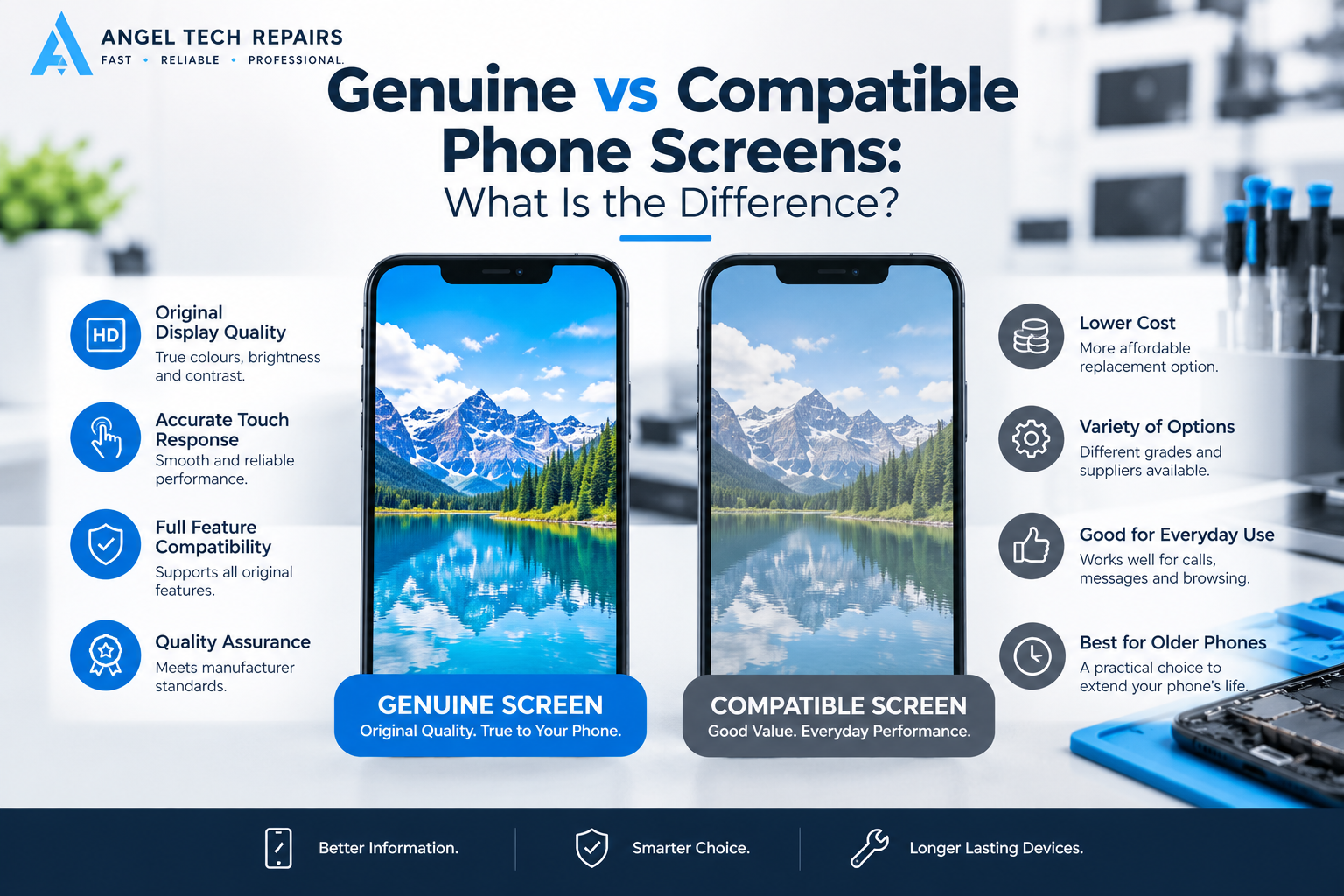
Genuine vs Compatible Phone Screens: What Is the Difference?
Introduction
When your phone screen cracks, develops lines, or stops responding to touch, replacing the display may be the best way to restore your device. However, when you visit a phone repair shop, you may be offered two options: a genuine screen or a compatible replacement screen.
Both options can help you get your phone working again, but they may differ in quality, price, brightness, colour accuracy, durability, and compatibility. Understanding these differences can help you choose the right screen for your device and budget.
In this guide, we explain what genuine and compatible phone screens are, how they compare, and what to consider before booking a phone screen replacement service.
What Is a Genuine Phone Screen?
A genuine phone screen is an original manufacturer part or a component supplied through an authorised parts channel. For example, a genuine replacement display for an iPhone or Samsung phone is designed to meet the manufacturer’s specifications for the relevant model.
Genuine replacement parts are often preferred by people who want their repaired phone to retain a display experience close to its original condition.
Benefits of Genuine Phone Screens
- Display quality
Genuine screens are designed to deliver the brightness, colour reproduction, contrast, and viewing experience intended for the device. The exact performance depends on the phone model and display technology.
- Touchscreen responsiveness
A suitable genuine replacement should provide touch performance consistent with the device’s original specifications, including accurate input for typing, scrolling, and gaming.
- Compatibility with phone features
Modern smartphones include features such as automatic brightness adjustment, high refresh rates, and in-display fingerprint sensors. A genuine, model-appropriate replacement is generally a strong option for maintaining compatibility with these features, although calibration or additional repair steps may still be required.
- Quality assurance
Genuine parts obtained from reliable suppliers can offer greater confidence in component quality and traceability. Repair warranties depend on the service provider and the parts used.
Are There Any Disadvantages?
The main disadvantage is cost. Genuine screens can be more expensive than compatible alternatives, particularly for newer flagship phones.
Availability can also vary by model. Some repairs may require specialised tools, calibration, or authorised service procedures.
What Is a Compatible Phone Screen?
A compatible phone screen is a replacement display manufactured by a third-party supplier rather than supplied as an original manufacturer part.
Compatible screens are available in different grades and technologies. Some offer good everyday performance, while lower-quality options may have noticeable differences in brightness, colour, touch sensitivity, or durability.
The term “compatible” does not automatically mean that a screen is poor quality. Its performance depends on the materials, manufacturing standards, specifications, and quality control of the particular replacement.
Benefits of Compatible Phone Screens
- Lower replacement cost
Compatible screens are often more affordable than genuine parts. They can be a practical choice if you need to repair your phone without spending too much.
- More options
Third-party suppliers may offer several replacement grades for the same phone model. This gives customers more flexibility when comparing price and expected performance.
- Suitable for everyday use
A good-quality compatible screen may be perfectly adequate for calls, messaging, browsing, social media, and other everyday activities.
- A practical option for older phones
If your device is several years old, investing in an expensive original display may not always make financial sense. A reliable compatible replacement may help extend the phone’s useful life at a lower cost.
What Should You Consider?
Not every compatible screen performs equally well. Some replacements may have lower brightness, less accurate colours, weaker glass, or reduced touch responsiveness.
Certain features, such as high refresh rates, always-on displays, or fingerprint recognition, may also be affected if the replacement does not fully support the original specifications.
Before choosing a compatible screen, ask the repair technician about its grade, expected performance, warranty, and any limitations.
Genuine vs Compatible Phone Screens: Key Differences
The following comparison highlights the main factors to consider when choosing a replacement display.
Feature | Genuine screen | Compatible screen |
Manufacturer | Original manufacturer or authorised supply channel | Third-party supplier |
Price | Usually more expensive | Often more affordable |
Display quality | Designed to meet original specifications | Varies by supplier and screen grade |
Touch responsiveness | Designed for the original device | Depends on replacement quality |
Feature compatibility | Generally the strongest option for original specifications | May vary by model and part |
Availability | Depends on model and supplier | May offer more choices |
Warranty | Depends on seller and repair provider | Depends on seller and repair provider |
Best suited for | People prioritising original specifications | People seeking a lower-cost repair |
It is important to remember that the actual results depend on the specific phone model and replacement component. A reputable repair shop should explain what you are paying for rather than simply labelling a screen as premium or standard.
How Much Does Phone Screen Replacement Cost?
The price of a phone screen replacement depends on several factors, including the phone brand, model, display technology, and availability of parts.
For example, replacing the screen on an older budget smartphone is usually less expensive than replacing a modern flagship phone with an advanced OLED display.
Genuine screens generally cost more, while compatible alternatives can reduce the initial repair expense. However, choosing the cheapest option may not always provide the best long-term value if the screen performs poorly or needs to be replaced again.
Before approving a repair, ask for a clear quotation that includes the screen, labour, and any additional costs. You should also check whether the price includes testing and a repair warranty.
Which Phone Screen Should You Choose?
The best option depends on your priorities, how you use your phone, and how long you plan to keep it.
Choose a Genuine Screen If:
- You want a display designed to meet the original manufacturer’s specifications.
- You use your phone frequently for photography, video, gaming, or other demanding activities.
- You want the best chance of retaining the original display characteristics and supported features.
- You plan to keep your phone for several more years.
- Your budget allows for the higher replacement cost.
Choose a Compatible Screen If:
- You need a more affordable repair.
- Your phone is an older model.
- You mainly use your phone for calls, messages, browsing, and social media.
- You have found a reliable replacement from a reputable supplier.
- The technician clearly explains any differences in quality or functionality.
Whichever option you choose, make sure the replacement is suitable for your exact phone model.
Signs That Your Phone Screen Needs Replacing
Sometimes, the damage is obvious, but other display problems may develop gradually.
Here are some common signs that you may need a replacement screen:
Cracked glass: Visible cracks can make the phone uncomfortable to use and may worsen over time.
Black spots or ink-like marks: Dark patches can indicate damage to the display panel beneath the glass.
Lines across the screen: Vertical or horizontal lines may point to a damaged display panel or an internal connection problem.
Unresponsive touch: If parts of the screen no longer respond, the digitiser or display assembly may need attention.
Flickering display: Repeated flickering may be caused by screen damage, a loose connection, software issues, or another hardware fault.
Incorrect colours: Unusual colour changes or patches can indicate display damage or a technical issue that requires diagnosis.
A technician should inspect the phone before recommending a replacement because not every display problem requires the same repair.
Why Professional Phone Screen Replacement Matters
Replacing a smartphone screen involves more than removing cracked glass and installing a new panel. Modern phones contain delicate internal components, adhesives, cables, cameras, and sensors that can be damaged during an inexperienced repair.
A professional repair technician can help by:
- Checking the phone to identify the cause of the display problem.
- Recommending a suitable replacement for the exact model.
- Inspecting the frame and internal components for additional damage.
- Testing touch response, brightness, and display performance after installation.
- Checking relevant features, such as proximity sensors and fingerprint recognition, where applicable.
- Explaining the repair warranty and any limitations.
It is also worth asking whether the repair may affect the phone’s water resistance. Opening a phone can compromise its original seals, and resistance should not be assumed after a screen replacement.
How to Choose a Reliable Phone Repair Shop
Choosing the right repair provider is just as important as selecting the replacement screen.
Before booking a repair, consider the following points:
Ask about the screen type. Confirm whether the part is genuine, refurbished, or compatible. These terms describe different things, so ask for a clear explanation.
Compare the total price. A quotation should explain what is included, such as parts, labour, testing, and warranty.
Check repair experience. Look for a technician who regularly works with your phone brand and model.
Ask about testing. The shop should test the display and relevant features before returning your device.
Review the warranty. Understand what is covered if the replacement develops a fault or touch response becomes unreliable.
Protect your personal data. Back up your phone before the repair and follow the provider’s guidance on keeping your information secure.
A trustworthy repair shop should help you understand your options without pressuring you into buying a more expensive part than you need.
Conclusion
The main difference between genuine and compatible phone screens is the source of the part, its specifications, and the consistency of its performance.
Genuine screens are generally the better choice if you want to maintain the display characteristics intended by the original manufacturer. Compatible screens can be a more affordable alternative, especially when you choose a good-quality replacement from a reliable supplier.
Before making a decision, compare the cost, expected display quality, feature compatibility, and warranty. A professional assessment can help you choose the right replacement and avoid unnecessary expenses.
Need a phone screen replacement? Visit Angel Tech Repairs to explore repair services and ask about suitable screen replacement options for your device.